Engine Room Signal: Workforce Intelligence as a Leading Indicator for Investment Research
Workforce intelligence is no longer just for HR; it is a high-alpha alternative data source that allows investors to predict company performance through headcount shifts, attrition spikes, and hiring velocity.
The Information Gap in Public Markets
In a world where every hedge fund and private equity firm has access to the same Bloomberg terminals, the same earnings call transcripts, and the same quarterly filings, the race for alpha has moved from who has the fastest access to who has the deepest context. Traditional financial metrics are, by definition, lagging indicators. They tell you what happened three months ago. They are the scoreboard at the end of the game.
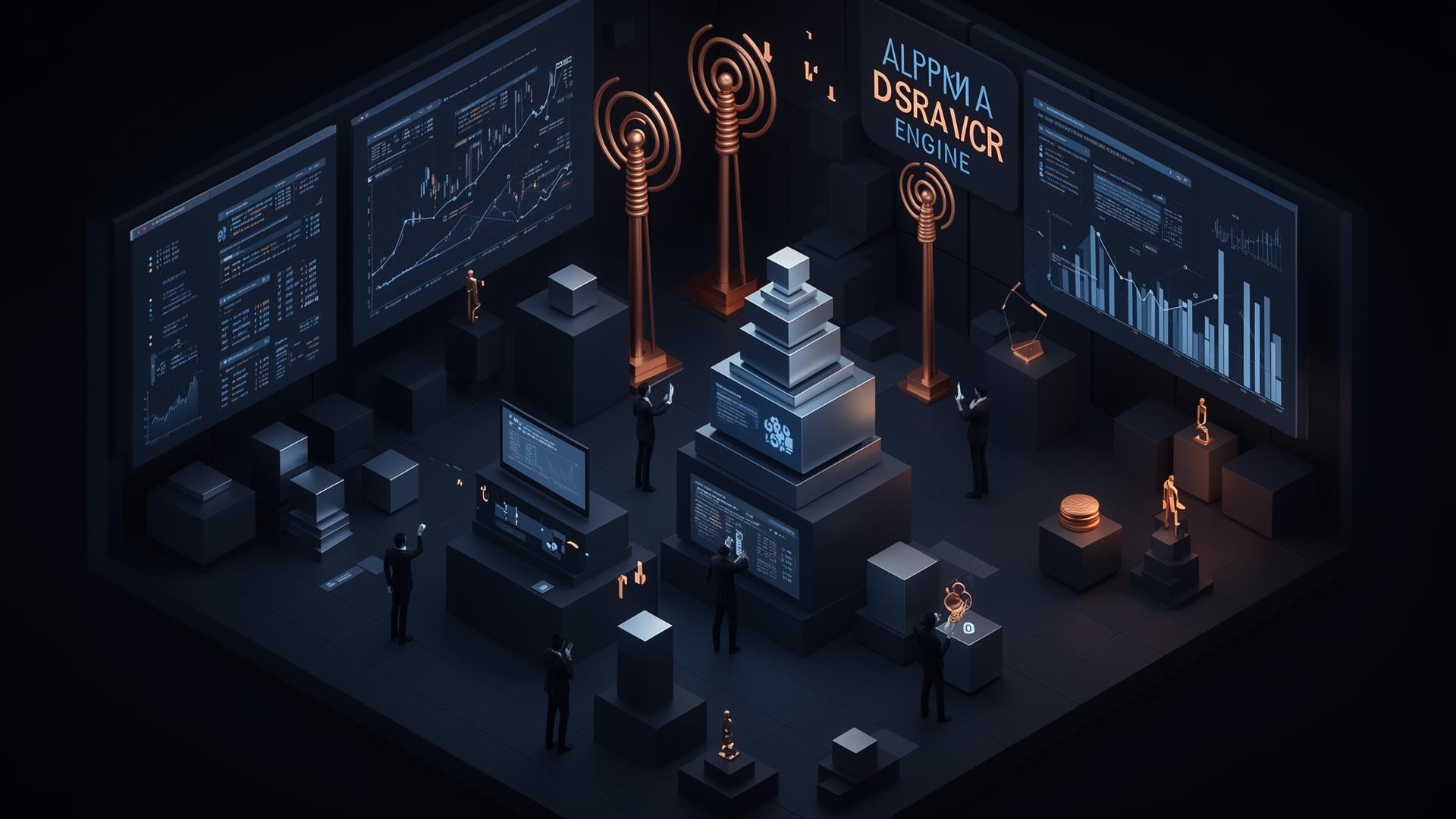
Think of it like tracking a ship across the Atlantic. Financial reporting is like waiting for the ship to dock to see how much cargo arrived. Workforce intelligence is like having a satellite view of the engine room. You see the crew increasing, the fuel consumption spiking, or, more alarmingly, the engineers jumping overboard long before the ship hits the iceberg or reaches the port. For the modern investment researcher, the movement of human capital is the most reliable proxy for the movement of actual capital.
Workforce data isn't an HR metric; it is the raw material of operational truth.
Headcount Growth: Beyond the Vanity Metric
When you see a company grow its headcount by 20% in a quarter, the instinctual reaction is to label it "growth." But institutional-grade workforce intelligence requires a more surgical approach. You need to look at where that headcount is going. Is the growth concentrated in sales and marketing, or is it in R&D?
Consider a SaaS company claiming a pivot toward Artificial Intelligence. If their job postings and internal transfers show a 40% increase in Cloud Infrastructure engineers but a 15% decrease in traditional front-end developers, the pivot is real. If the headcount growth is purely in administrative "overhead" roles, you aren't looking at a growth story; you’re looking at a bloated cost structure that will inevitably drag down EBITDA. At Vivameda, we view these flows as "infrastructure signals" that validate or debunk management's public narrative.
Net headcount change is a financial result; functional headcount distribution is a strategic intent.
Attrition Spikes: The Quiet Precursor to Volatility
High attrition is often dismissed as a "cultural issue," but for an investor, it is a liquidity risk. When top-tier talent leaves a firm, they don't just take their laptops; they take intellectual property, institutional memory, and client relationships. In high-stakes sectors like quant trading or biotech, a sudden "talent leak" in a specific team is frequently the first sign of a failed product launch or a regulatory hurdle that hasn't hit the news yet.
Imagine a tech giant whose senior engineering turnover in their flagship "Metaverse" division spikes by 30% over two months. To the public, the company is still the same. To the data-driven investor, those exits represent a massive "write-down" of human assets that will manifest as project delays in six months. By monitoring the seniority and tenure of those leaving, you can differentiate between healthy "churn" and a systematic "brain drain."
Attrition isn't just turnover; it is a leading indicator of institutional de-risking by the people who know the company best.
Hiring Velocity and Days-to-Fill: Measuring Execution Risk
If a company announces a massive expansion into a new territory but their "Days-to-Fill" for critical roles in that region is climbing, they are going to miss their targets. It’s that simple. Hiring velocity is a measure of a company's "GTM friction." If it takes them 90 days to hire a Sales Director while their competitor does it in 45, the competitor has a 45-day head start on revenue generation.
When you analyze the velocity of hiring alongside the complexity of the roles, you get a clear picture of execution capability. Are they struggling to attract talent because their employer brand is tarnished? Or is the labor market for those specific skills so tight that their expansion plans are fundamentally unachievable within the projected Capex? These are the questions that workforce data answers long before the CFO has to explain a "slow start to the fiscal year" on an analyst call.
Hiring velocity is the pulse of a company’s operational momentum; when the pulse slows, the revenue follows.
Operationalizing Talent Intelligence: A Framework for Diligence
How do you move from "interesting data" to "actionable signal"? It requires moving away from static CSVs and toward a historical, longitudinal view of company structures. At Vivameda, we advocate for a three-layer framework:
- The Macro Layer: Track total talent flow across an entire sector. Is the "talent pool" shifting from legacy incumbents to nimbler startups? This identifies structural shifts in a market.
- The Competitive Layer: Compare two peers. If Company A is poaching aggressively from Company B’s product team, Company A is likely building a "feature-killer."
- The Internal Layer: Analyze the ratio of "Builders" (Engineers/Product) to "Sellers" (Sales/Marketing) to "Supervisors" (Middle Management). A shift in these ratios often precedes a change in margin profile.
By treating workforce data as infrastructure - integrated into your existing risk models - you stop looking at people as "costs" and start looking at them as the primary drivers of future cash flow.
Building a workforce data strategy is about mapping the DNA of a company to predict its future physical form.
The New Moat
We are entering an era where capital is abundant but specialized talent is scarce. In this environment, the most valuable "alternative" data isn't credit card swipes or satellite imagery of parking lots - it is the granular, historical movement of the world's workforce. If you aren't tracking who is being hired, who is leaving, and how fast they are moving, you are trading with a blind spot. In the high-stakes world of institutional investing, the most dangerous thing you can do is assume the "people stuff" doesn't show up on the balance sheet. It always does.
The smartest money in the room isn't just watching the ticker; it’s watching the door.