Rehire Reversal: What Workforce Analytics Reveals About the True Cost of AI-Driven Retrenchment
A 2026 study shows 66% of companies that cut staff due to AI are now rehiring them, revealing the massive hidden costs of failing to differentiate between automated tasks and redundant roles.
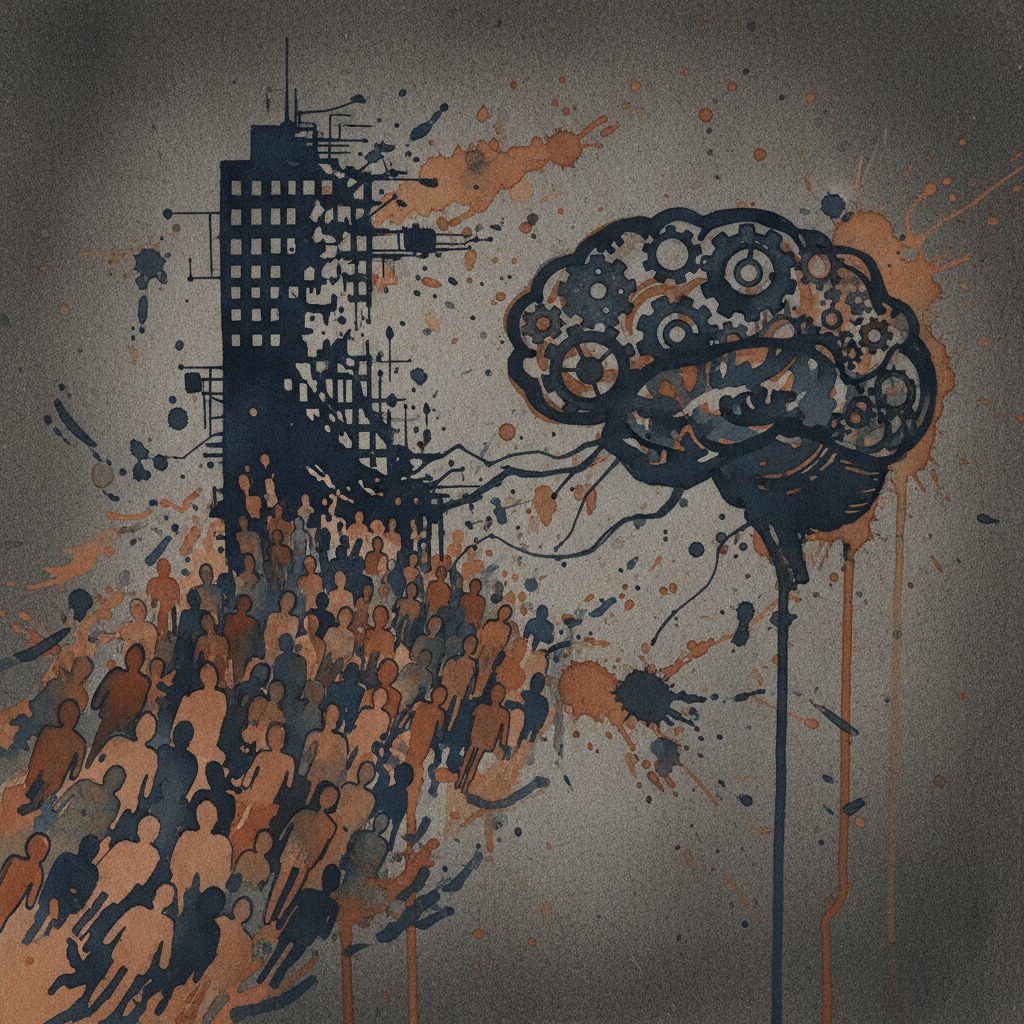
A curious thing happened in the first quarter of 2026. The aggressive workforce reductions that dominated the previous eighteen months, fueled by optimistic projections of AI automation, hit a sudden and expensive wall. What was framed as a strategic pivot toward efficiency has turned into a massive logistical and financial headache. Organizations that rushed to replace biological intelligence with artificial circuits are now scrambling to win back the very talent they escorted out the door.
Recent data from Careerminds highlights a startling trend: two out of three employers who reduced their headcount due to AI are now actively rehiring. Many executives are expressing public regret. This is not just a minor miscalculation; it is a fundamental failure of workforce intelligence and a cautionary tale about the dangers of managing people based on speculation rather than grounded data. When you treat your workforce like a cost center to be optimized by any means necessary, you risk dismantling the invisible infrastructure that actually keeps your company afloat.
The rehire reversal is a byproduct of what we call the AI-driven retrenchment trap. Organizations looked at a generative tool, extrapolated its potential across an entire department, and moved to fire before they truly understood the internal wiring of their own operations. Now, the bill for that impatience has arrived.
Workforce data must be viewed as vital infrastructure, not merely a list of names and titles to be shuffled during quarterly reviews.
Missing Signals: Why AI Projections Failed Operational Reality
To understand how so many leadership teams got it wrong, you have to look at the gap between what an AI tool can do in a vacuum and what a human does in a complex organizational ecosystem. Most workforce analytics models used during the 2024 and 2025 layoff waves were too shallow. They looked at job descriptions and matched them against automation capabilities. On paper, it looked like a 40 percent efficiency gain. In reality, it was a mirage.
Think of your company like an old house. You might see a wall and decide it looks outdated; you decide to tear it down to create an open concept. Only after the dust settles do you realize that wall was load bearing. Organizations fired people who held the secret keys to legacy systems, people who managed the difficult relationships with key vendors, and people who knew exactly why a certain process was built in a specific way five years ago.
These companies missed the signal of complexity. They mistook a "task" for a "role" and assumed that if the task was automated, the role was redundant. This lack of granular workforce intelligence led to a massive erosion of institutional knowledge that no current AI model can replicate or replace. You cannot automate a relationship, and you cannot automate the tribal knowledge required to navigate a specific corporate culture.
The fatal flaw was using AI capability as a proxy for operational success, ignoring the structural dependencies that humans maintain.
Quantifying the True Cost of the Hire-Fire-Rehire Cycle
The financial impact of this reversal is staggering. It is not just about the severance packages, though those were substantial. It is about the friction of the entire cycle. When you let someone go and then realize six months later that you cannot function without their specific expertise, you are looking at a compounding loss that hits the balance sheet from four different directions.
First, there is the immediate cash outlay for severance and legal fees. Second, there is the massive loss in productivity as remaining employees suffer from burnout and the uncertainty of future cuts. Third, there is the cost of rehiring: recruitment fees, sign-on bonuses to lure back disgruntled former employees, and the time spent on boarding them all over again. Finally, there is the "regret premium": you often have to pay these returning workers higher salaries than they had before just to convince them to return to a workplace that previously deemed them expendable.
Market data suggests that the cost of rehiring a former employee can be 1.5 to 2 times their annual salary when you factor in the lost momentum of the business. For a mid-level director in a technical field, that is a half-million-dollar mistake. When multiplied across hundreds or thousands of employees, the "efficiency" gained by AI is completely wiped out by the logistical friction of the retrenchment process.
The hire-fire-rehire cycle is an expensive admission of poor predictive planning that destroys long-term enterprise value.
Predictive Analytics: Tasks versus Roles
How do you avoid this trap? You need a framework that distinguishes between automatable tasks and redundant roles. This requires a move toward high-resolution workforce data. Instead of looking at a "Customer Success Manager" as a single unit, you must map the specific signals that define their impact. If a person spends 70 percent of their time on data entry, that task is automatable. But if the remaining 30 percent is spent on high-stakes negotiation and strategic account retention, the role is vital.
You need to build a workforce infrastructure that maps internal connectivity. By analyzing the frequency and importance of cross-departmental collaboration, you can identify "nexus" employees who hold the organization together. These people are often invisible in traditional HR databases but are the first people missed when they are gone. Predictive analytics should help you redistribute their time, not remove their presence.
If you use data to identify where AI can augment a human's output, you create a superpower. If you use it to find an excuse to fire them, you are likely just creating a future job opening that will be harder to fill. The goal should be task displacement leading to role evolution, not role elimination based on a software demo.
True workforce intelligence maps the invisible lines of influence and expertise that make an organization move, far beyond a simple org chart.
Building a Resilient Workforce Infrastructure
The lesson of the 2026 rehire reversal is that workforce data is not a contact database; it is the most critical infrastructure your company owns. If you treat it as a static record, you will continue to make reactive, expensive mistakes. If you treat it as a dynamic, historical map of talent and capability, you can navigate technological shifts without destroying your foundation.
For VPs of Data and Talent Analytics, the mandate is clear: you must build models that account for the human element of operational continuity. Stop looking at the "now" and start looking at the "how." How does work actually get done? Who are the informal mentors? Where does the knowledge live? When you have those answers, you can deploy AI with precision rather than using it like a blunt instrument.
The companies that are winning in this new era are not the ones who fired the most people. They are the ones who used data to realize their people were the only ones capable of actually implementing the AI they just bought. They understood that you cannot automate a company into excellence if there is no one left who knows how to run the machine.
Success in the AI age depends on your ability to measure the value of what cannot be automated, ensuring your foundation remains intact as the tools change.
Your headcount is the pulse of your operational reality, and right now, the data suggests your heart is skipping a beat because you tried to replace its rhythm with an algorithm you did not fully understand.