Foundation Intelligence: The Best Deal Teams Start With Structural Data
Most private market signals decay within weeks. Foundation intelligence is the structural layer beneath them: company history, workforce evolution, and capability trajectories that make predictions durable.
Every deal team has access to the same surface signals. Job postings, press releases, executive changes, and funding announcements circulate through the same databases and alert systems within hours. By the time a signal looks interesting, it is usually already priced into the opportunity. The edge does not come from seeing what everyone sees. It comes from knowing what most databases forgot.
That deeper layer is foundation intelligence. It is the structural record of how a company, its people, and its capabilities evolved over time. It does not move with the news cycle. It does not decay when a quarter ends. It is the bedrock on which accurate private market predictions are built.
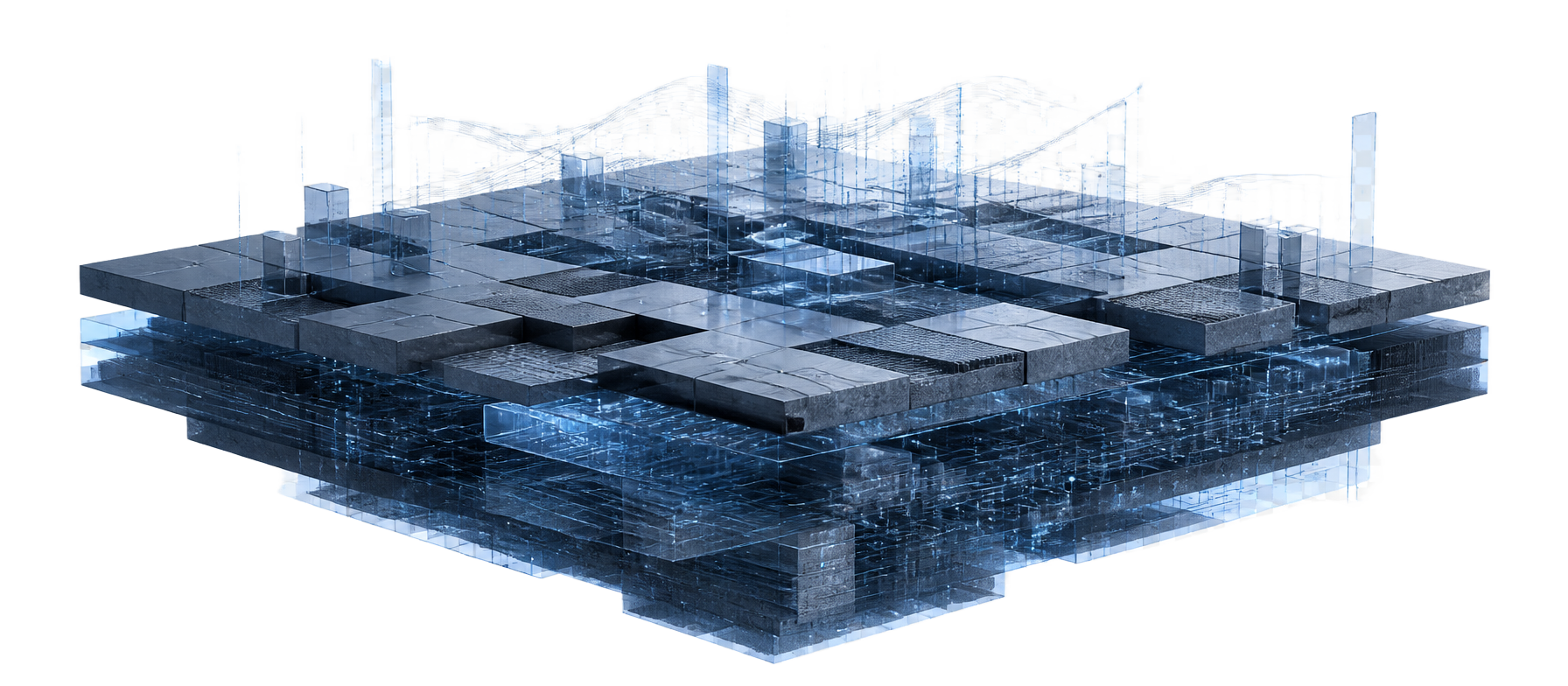
Foundation intelligence is the structural layer beneath surface signals: company history, workforce evolution, and capability trajectories that make predictions durable.
Surface Signals Are Everywhere. Structure Is Not.
The modern deal professional is flooded with intent data. Someone visited a pricing page, a new executive was hired, a competitor raised capital. These signals are useful, but they are also fragile. They describe moments, not trajectories. A hiring spike can mean growth, or it can mean a failed automation project. A funding round can mean momentum, or it can mean a bridge to nowhere.
Without the structural context, every surface signal is a coin flip. Foundation intelligence adds the missing dimension: time. It shows whether a company has scaled this function before, whether leadership turnover is normal or abnormal, and whether a capability expansion is supported by the underlying organization or forced by external pressure.
Surface signals tell you what happened today. Foundation intelligence tells you whether that event is part of a pattern or an exception.
What Foundation Intelligence Actually Contains
Foundation intelligence is not a single dataset. It is a composite view built from records that do not change retroactively. At Vivameda, this layer spans 70+ years of observed company records, 4.2M companies, and 48M+ longitudinal data points. The core components include:
- Organizational structure over time: How reporting lines, functions, and subsidiaries evolved, not just the current org chart.
- Workforce evolution: Hiring velocity, role composition, geographic concentration, and leadership stability across years.
- Capability trajectories: Which skills and functions the company built, abandoned, or outsourced, and when.
- Leadership lineage: Where executives came from, what they built before, and how their tenures correlate with performance.
- Market position signals: Long term competitive moves, customer concentration patterns, and operational footprint changes.
Each component is valuable on its own. Together, they form a profile that is difficult to replicate and nearly impossible to fake.
The strongest foundation intelligence combines multiple structural records into one coherent longitudinal profile.
Why Deal Teams Need It
Private market investors, corporate development teams, and strategy advisors are paid to be right before the market agrees with them. That requires looking past the current narrative and testing it against historical evidence. Foundation intelligence makes this possible in three concrete ways.
It Reveals Divergence
Two companies can report the same revenue, headcount, and growth rate today and have opposite risk profiles. One built its team gradually over a decade. The other hired aggressively in the last 18 months to satisfy a single customer. The surface numbers look identical. The foundation tells a different story.
It Detects Capacity Before Capacity Is Announced
A company does not enter a new market because it issues a press release. It enters because it hired the people, built the functions, and restructured the organization months earlier. Foundation intelligence captures those preparatory moves as they happen, not after they are disclosed.
It Reduces Surprise in Downturns
Companies with weak foundations often look strong during bull markets. When conditions tighten, the gaps appear quickly. Foundation intelligence helps identify which organizations have the structural resilience to survive a contraction and which are held up by temporary momentum.
Foundation intelligence does not replace judgment. It gives judgment a stronger starting point.
From Foundation to Prediction
The goal is not to collect more data. The goal is to build a base layer that makes every other signal more interpretable. When a foundation is clean, current events become questions with answers. When it is missing, the same events become guesses dressed up as analysis.
At Vivameda, we treat foundation intelligence as the starting point for every engagement. Before we model a prediction, we reconstruct the structural history of the target. We ask what the company has actually built, who built it, and whether that foundation can support the future that management is selling. The result is not a guarantee. It is a much better calibrated view of probability.
Predictions built on foundation intelligence are not more certain. They are more grounded.
Conclusion: Start Below the Surface
The private market rewards those who see earlier than others. But seeing earlier does not mean scanning more headlines. It means building a view of the company that existed before the latest announcement, before the current financing round, and before this quarter's narrative took hold.
Foundation intelligence is that view. It is the record of what a company actually is, measured across years rather than days. For deal teams who want to stop reacting and start anticipating, it is the only place to start.
If your intelligence is only as deep as this week's signals, your edge will expire with them.