Experience vs. Vulnerability: What Workforce Data Reveals About AI Job Displacement Across Age Groups
New data from the Dallas Fed reveals that younger workers, not older ones, are most vulnerable to AI displacement. Learn how granular workforce intelligence helps leaders identify the specific skills that protect against automation.
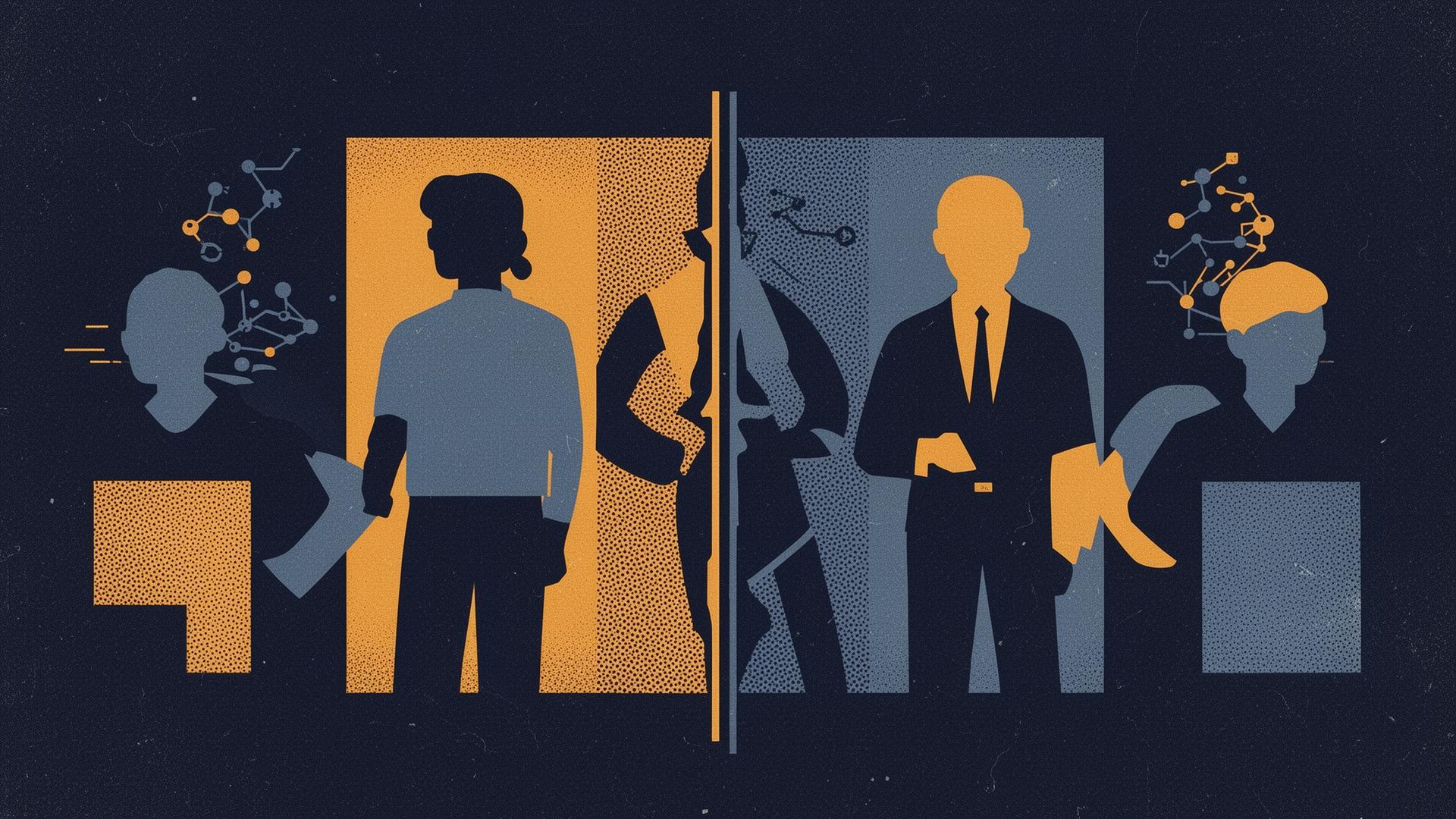
For years, the conventional wisdom surrounding automation was simple: technological disruption targets the older worker first. We imagined the veteran employee struggling to adapt to new software while the digital native breezed through the transition. However, recent findings from the Dallas Federal Reserve have upended this narrative, revealing that since the launch of generative AI, it is actually younger workers who face the most significant displacement risk.
This demographic shift is more than a statistical curiosity; it is a fundamental reconfiguration of how we value human capital. To understand why experience has become a shield against AI, we have to look past simple birth years and examine the underlying anatomy of work. The challenge for enterprise leaders and investment researchers today is to move beyond broad demographic trends and into the granular reality of skill based resilience.
The traditional age-based narrative of technological vulnerability has been fundamentally broken by the arrival of generative AI.
The Experience Moat: Why Older Workers Are Winning
Think of professional expertise like building a house. Younger workers are often hired to carry the bricks, mix the mortar, and lay the foundation. These represent the entry-level tasks: drafting basic code, summarizing meetings, or performing preliminary research. These are exactly the tasks that Large Language Models perform with superhuman efficiency.
Older, more experienced workers are the architects. They aren't just placing bricks; they are ensuring the structure adheres to code, navigating complex zoning laws, and managing the client's expectations. These high-level cognitive functions - judgment, contextual nuance, and complex stakeholder management - are currently the most resistant to AI displacement.
The Dallas Fed data suggests that the "junior" roles, which historically served as the apprenticeship phase for white-collar careers, are being hollowed out. While older workers possess the "institutional knowledge" to verify and direct AI output, younger workers are finding the first rung of the career ladder has suddenly become much harder to reach.
Experience acts as a moat because AI can currently mimic the execution of a task, but it struggles to replicate the strategic judgment required to oversee it.
Beyond Demographics: The Need for Granular Intelligence
If you are managing a multi-billion dollar portfolio or leading a workforce of ten thousand people, knowing that "younger workers are at risk" is too blunt an instrument for decision-making. Age is a proxy, not a cause. To build a resilient organization, you must stop looking at birth dates and start looking at the specific capabilities that drive value within your unique infrastructure.
Workforce data should not be treated as a phone book or a contact list. It is structural intelligence. You need to know which specific roles in your organization are "high-exposure" versus "high-complementarity." High-exposure roles are those where AI replaces the core output; high-complementarity roles are those where AI acts as a power tool, making the human worker more productive.
For example, a junior analyst and a senior strategist may both use AI tools, but their risk profiles are polar opposites. The data reveals that the senior strategist’s value actually increases as they leverage AI to handle more volume, whereas the junior analyst’s entire job description may be subsumed by the tool itself.
Granular workforce intelligence allows you to map vulnerabilities at the skill level, revealing the specific professional DNA that protects or exposes an employee.
Mapping Exposure Across the Portfolio
For investment research directors, workforce data is the "missing link" in assessing long-term company health. A company with a top-heavy age distribution might have looked like a liability five years ago due to high pension costs or impending retirements. Today, that same demographic profile might represent a deep reservoir of "AI-proof" intellectual capital.
By analyzing the historical evolution of a company’s workforce, you can identify patterns of adaptation. Are they hiring more specialists in areas that complement AI? Or are they bloating their ranks with entry-level roles that are destined for obsolescence? This isn't just about talent acquisition; it's about the structural integrity of the firm’s competitive advantage.
Imagine evaluating two competing law firms. Firm A has a traditional pyramid structure with hundreds of junior associates doing heavy research. Firm B has reorganized around a decentralized model of "partner-level" thinkers supported by advanced technical infrastructure. Workforce data tells you which firm is a dinosaur and which is an apex predator.
Investment researchers must treat workforce composition as a lead indicator of a company’s ability to survive the transition to an AI-driven economy.
The Reskilling Trap: Data-Driven Decisions vs. Assumptions
Many talent leaders are rushing into massive reskilling initiatives based on gut feelings. They assume everyone needs to "learn to prompt." But the Dallas Fed findings suggest that the real gap isn't technical literacy; it is the accelerated development of judgment and complex reasoning in younger staff.
If younger workers are being displaced because they lack the "moat" of experience, the solution isn't just more AI training. The solution is creating new ways for junior talent to gain high-level experience when the traditional entry-level tasks no longer exist. You cannot solve a structural problem with a superficial training module.
Using longitudinal workforce data, organizations can identify "pivot roles" - positions where a worker’s existing skills are 70% aligned with a higher-value, AI-resilient role. Instead of broad-based training, you can execute surgical reskilling that moves vulnerable employees into roles with sustainable growth trajectories. This reduces turnover costs and preserves institutional knowledge.
Evidence-based reskilling requires a deep understanding of the "skill distance" between current roles and future-proof ones.
Workforce Data as Strategic Infrastructure
To navigate this age-defying shift, enterprises must stop viewing workforce data as an HR byproduct and start viewing it as essential infrastructure. Just as you wouldn't manage a supply chain without real-time tracking of every component, you cannot manage a workforce without a granular map of its capabilities, history, and exposure to automation.
The Dallas Fed study is a wake-up call that the rules of the game have changed. The "safe" path of hiring young and cheap is becoming a risk-heavy strategy, while the "expensive" veteran workforce is becoming a source of stability. Tracking these shifts requires a sophisticated data asset that captures the movement of talent across entire industries over decades.
At Vivameda, we believe that the companies that win the next decade will be those that treat their people data with the same rigor as their financial data. When you can see the skills, the history, and the movement of the global workforce, you stop guessing about the future of work and start building it.
True workforce intelligence is the only way to distinguish between a demographic trend and a fundamental shift in the value of human labor.
Conclusion: The Future of Experience
We are entering an era where biological age is becoming less relevant than the "cognitive mileage" an individual has logged. The Dallas Fed findings confirm that experience is the new currency in the age of AI. However, this currency must be managed with precision. Relying on age as a proxy for risk is a shortcut that leads to missed opportunities and strategic errors.
Whether you are a VP of Data looking to optimize internal talent or an Investment Research Director scouting the next market leader, the mandate is the same: Look deeper. The real story isn't about when a worker was born; it is about what they know that an algorithm cannot yet replicate. The data is there. The only question is whether you have the infrastructure to see it.
The greatest risk in the age of AI is not the machine itself, but the failure to understand the human architecture it is designed to replace.